Showing posts with label violence. Show all posts
Wednesday, April 25, 2018
The Cross, The Lynching Tree, and the Crosshairs: Racial Violence and American Christianity
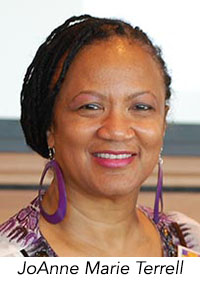
Rev. Dr. Joanne Marie Terrell
Associate Professor of Theology, Ethics, and the Arts
Chicago Theological Seminary
April 10, 2018
Grawemeyer Award in Religion
(Dr. James Cone's book, The Cross and the Lynching Tree, won the 2018 Grawemeyer Award in Religion. Dr. Cone was unable to present a lecture due to personal reasons. Dr. Terrell, a former graduate student of Dr. Cone's, spoke in his place.)
Dr. Cone's book contrasts the Christian tradition regarding the Cross of Jesus with the Christian response to lynching. White Christians murdered over 5000 black men, women, and children during the lynching era, and did not see the parallels between the persecution and murder of Jesus on the cross and the death by lynching on the tree. Anger over this, and the continuing mistreatment of black and brown peoples, is the only reasonable response for a Christian. The key is to use the anger to move beyond guilt to doing the work of justice and love. Listen to the lecture.
Monday, April 23, 2018
Black Joy in the Mo(u)rning
Brandon McCormack
Assistant Professor, Pan-African Studies, University of Louisville
March 26, 2018
Black Church Studies Consultation
Psalm 30:5b
The psalmist tells a mourning story as do African Americans who carry the psychic cost of existing in America while black. The psalmist also reminds us that while mourning is necessary, there will also be a morning when, with God's help, we can reclaim our joy. Listen to the sermon.
Friday, November 14, 2014
A Just Peace Approach to Ending the Global War on Women
Susan Thistlethwaite
Professor of Theology, Chicago Theological Seminary
Edwards Lecture
November 13, 2014
This lecture focuses on the roles that spiritual leaders and faith communities from all denominations play to respond to the widespread culture of violence against women. Listen to the lecture. (Please note that the speaker occasionally refers to images that we do not have the rights to post.)
Professor of Theology, Chicago Theological Seminary
Edwards Lecture
November 13, 2014
This lecture focuses on the roles that spiritual leaders and faith communities from all denominations play to respond to the widespread culture of violence against women. Listen to the lecture. (Please note that the speaker occasionally refers to images that we do not have the rights to post.)
Labels:
church,
culture,
Edwards Lecture,
violence,
women
Wednesday, February 26, 2014
Choosing Life Behind the Veil
Scott C. Williamson
Robert H. Walkup Professor of Theological Ethics
February 21, 2014
Deuteronomy 30:15-20
Listen to the sermon.
Robert H. Walkup Professor of Theological Ethics
February 21, 2014
Deuteronomy 30:15-20
Listen to the sermon.
Friday, November 22, 2013
Greed as Violence: The Role of the Global Church in Addressing the Enduring Spiritual Crisis of Our Time
Dr. Shanta Premawardhana
President of the Seminary Consortium for Urban Pastoral Education
November 14, 2013
The Henry H. and Marion A. Presler Lecture
Listen to the lecture.
President of the Seminary Consortium for Urban Pastoral Education
November 14, 2013
The Henry H. and Marion A. Presler Lecture
Listen to the lecture.
Monday, October 1, 2012
Moving From Fear to Peace
Bradley J. Wigger
Second Presbyterian Church Professor of Christian Education
April 13, 2012
John 20:19-31
The disciples are locked up in the house of fear. Shut in by their own fears. This is living inside the box, living inside the tomb. Listen to the sermon. Read the sermon in PDF.
Labels:
doubt,
doubting Thomas,
fear,
Holy Spirit,
John,
resurrection,
sermon,
violence,
Wigger
Friday, April 27, 2012
The Name of a Happy Ending
Heather Thiessen
Former Coordinator of the Women’s Center at LPTS
February 17, 2012
Job 42:10-17
The elimination of violence against women and girls is completely possible. It is simply asking for what most kindergarten teachers routinely ask for in their classrooms: no hitting, no hurting our neighbors, taking turns and keeping our hands to ourselves. If we can expect it of the average 5-year-old, we can surely expect it of the average person. Listen to the sermon. Read the sermon in PDF.
Job 42:10-17
The elimination of violence against women and girls is completely possible. It is simply asking for what most kindergarten teachers routinely ask for in their classrooms: no hitting, no hurting our neighbors, taking turns and keeping our hands to ourselves. If we can expect it of the average 5-year-old, we can surely expect it of the average person. Listen to the sermon. Read the sermon in PDF.
Thursday, February 24, 2011
We Have a Strong City
Part-time Director of the Women’s Center at LPTS
Feb 18, 2011
In a week of worship focused on the theme of violence against women, the text of Isaiah 26:1-13 challenges the people of God to remember that faithful response takes the shape of trusting, and working for, the transformation of suffering in the direction of joy, responding to God's promised redemption by longing and laboring to make it more concretely imaginable. Listen to the sermon. Read the sermon in PDF.
Friday, January 14, 2011
Genesis 16
Professor of Pastoral Care and Counseling
October 15, 2010—Domestic Violence Awareness Month
Domestic violence and God’s good intention for creation have lived in tragic tension for centuries. In the first family we are reminded that in a fit of jealousy and rage, Cain killed his own brother Abel. Domestic violence is a sin that separates and isolates victims from sources of value and meaning in God’s good creation. Listen to the sermon. Read the sermon in PDF.
Thursday, May 20, 2010
Confessing Our Sins: Forgiveness and Reconciliation in the Global Church

Kathryn L. Johnson
Professor of Historical Theology and Paul Tudor Jones Professor of Church History
April 26, 2010
Festival of Theology Lecture
Confession of faith sometimes involves recognition of sinfulness, and one particular legacy that touches many is the willingness to use violence in order to conform belief and practice. Mainline churches in North America can learn from the global Church, particularly in the global south, as those churches aggressively learning how to thrive with unity and diversity. Listen to the lecture.
Professor of Historical Theology and Paul Tudor Jones Professor of Church History
April 26, 2010
Festival of Theology Lecture
Confession of faith sometimes involves recognition of sinfulness, and one particular legacy that touches many is the willingness to use violence in order to conform belief and practice. Mainline churches in North America can learn from the global Church, particularly in the global south, as those churches aggressively learning how to thrive with unity and diversity. Listen to the lecture.
Monday, March 1, 2010
The Vision Thing

Johanna W. H. Bos
Dora Pierce Professor of Bible and Professor of Old Testament
Feb 19, 2010
Habakkuk 1:2-2:4
Parallels are drawn between the burden of violence the prophet saw, and the burden of violence and lack of justice experienced by modern women around the world. Listen to the sermon. (The text of this sermon is not available.)
Dora Pierce Professor of Bible and Professor of Old Testament
Feb 19, 2010
Habakkuk 1:2-2:4
Parallels are drawn between the burden of violence the prophet saw, and the burden of violence and lack of justice experienced by modern women around the world. Listen to the sermon. (The text of this sermon is not available.)
Friday, April 20, 2007
Some Sympathy for King Herod
Dr. Timothy B. Tyson
Winner, Grawemeyer Award--Religion (2007)
Author of Blood Done Sign My Name
April 19, 2007
Matthew 2:1-23
Timothy B. Tyson, winner of the 2007 Grawemeyer Award in Religion, reflects on how King Herod's strategy for dealing with the threat to his kingship posed by the birth of the messiah parallels the "measured military responses" favored by U.S. leaders today. But, such "rational" strategies are not permissible within a Christian framework because they are not undergirded by love. Through the course of the sermon, Dr. Tyson moves steadily from his starting position of "sympathy for King Herod," to a crescendo of criticism of the present war in Iraq and a stirring call to all Christians to make their voices heard. Listen to the sermon.
Winner, Grawemeyer Award--Religion (2007)
Author of Blood Done Sign My Name
April 19, 2007
Matthew 2:1-23
Timothy B. Tyson, winner of the 2007 Grawemeyer Award in Religion, reflects on how King Herod's strategy for dealing with the threat to his kingship posed by the birth of the messiah parallels the "measured military responses" favored by U.S. leaders today. But, such "rational" strategies are not permissible within a Christian framework because they are not undergirded by love. Through the course of the sermon, Dr. Tyson moves steadily from his starting position of "sympathy for King Herod," to a crescendo of criticism of the present war in Iraq and a stirring call to all Christians to make their voices heard. Listen to the sermon.
Subscribe to:
Posts (Atom)


